Hyperpigmentation in Seoul, Korea
Myeongdong Beauty Lounge Clinic
Beauty Lounge Clinic in Myeongdong, Seoul offers personalized hyperpigmentation treatments to improve dark spots, uneven skin tone, post-acne marks, and visible discoloration. Treatment plans are customized to each patient’s skin type, pigmentation concerns, sensitivity, downtime, and skincare goals.
Hyperpigmentation treatment is designed to improve dark spots, uneven skin tone, post-inflammatory marks, sun-related discoloration, and areas of excess pigment that can make the complexion appear uneven or dull. At Beauty Lounge Clinic in Myeongdong, Seoul, treatment can be planned according to individual pigmentation type, depth, skin tone, sensitivity, and treatment goals rather than using the same procedure for every patient.
For international patients searching for Hyperpigmentation Treatment in Seoul, Korea, the goal is not simply to lighten the skin, but to identify the cause of excess pigmentation and select a treatment that improves discoloration while minimizing irritation and rebound pigmentation.
What Can Hyperpigmentation Treatment Help Improve?
Hyperpigmentation develops when certain areas of the skin produce or retain more pigment than the surrounding skin.
Depending on the cause, treatment may help improve post-acne marks, sun spots, age spots, uneven skin tone, localized brown patches, dullness, and other areas of visible discoloration.
However, not all pigmentation is the same. Melasma, freckles, post-inflammatory hyperpigmentation, and sun-induced spots may require different treatment approaches.
Personalized Hyperpigmentation Treatment in Myeongdong
Hyperpigmentation treatment generally aims to reduce excess pigment, improve uneven skin tone, brighten dark areas, and create a clearer and more balanced complexion.
Depending on individual assessment, treatment planning may involve laser toning, pigment-targeting lasers, light-based procedures, chemical peels, brightening skincare, skin boosters, or combination therapy.
The key principle is simple:
The right Hyperpigmentation treatment should be selected according to the pigmentation type—not simply according to how dark the area appears.
Why Combination Treatment May Be Better
Patients with hyperpigmentation often have several concerns at the same time. Post-acne marks, sun spots, melasma, dullness, redness, dryness, and uneven texture can occur together.
Because one procedure may not address every concern equally, combination or staged treatment may be considered. For example, pigment-focused treatment may be combined with hydration, gentle exfoliation, skin barrier care, or texture-focused procedures depending on the patient's individual needs.
Hyperpigmentation Treatment for Asian Skin
When treating hyperpigmentation in Asian skin, particular attention should be given to skin sensitivity, pigmentation tendency, inflammation, sun exposure, and the risk of post-inflammatory hyperpigmentation (PIH).
More aggressive treatment does not automatically create better results. Energy settings, treatment depth, treatment intervals, skin barrier condition, and aftercare should be carefully considered to improve pigmentation while reducing the risk of irritation or rebound darkening.
Hyperpigmentation Treatment for International Patients in Seoul
International visitors often have different treatment schedules from local patients. Treatment planning should take into account how long you will stay in Seoul, previous pigmentation treatments, current skincare products, skin sensitivity, sun exposure, upcoming events, and your flight or travel schedule.
This is particularly important because Hyperpigmentation Treatments may cause temporary redness, dryness, sensitivity, mild peeling, darkening of treated areas, or visible treatment marks depending on the procedure selected.
How Many Sessions Are Needed?
There is no universal number of Hyperpigmentation Treatment sessions. The appropriate treatment course depends on pigmentation type, depth, skin tone, treatment method, previous procedures, sun exposure, healing response, and desired degree of improvement.
Rather than expecting all pigmentation to disappear after one session, treatment is generally approached as progressive pigmentation management. Dark spots and uneven tone may gradually become lighter over time, while results vary between individuals.
Why Choose Myeongdong Beauty Lounge Clinic?
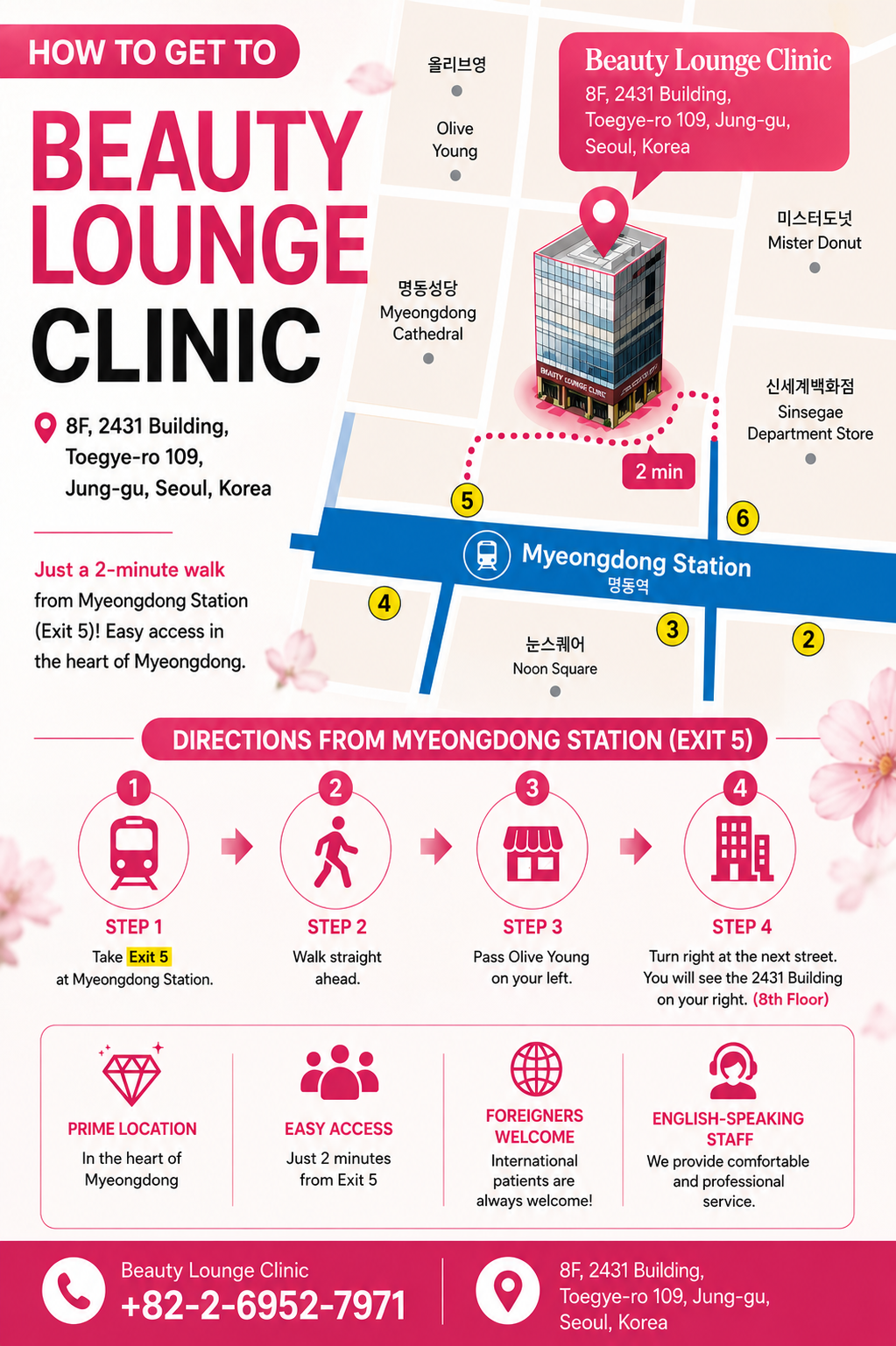
Located in Myeongdong, central Seoul, Beauty Lounge Clinic is conveniently positioned for international visitors staying around Myeongdong and nearby central Seoul districts.
For patients searching for Hyperpigmentation Treatment in Seoul, pigmentation treatment in Korea, or a hyperpigmentation clinic in Myeongdong, consultation can help determine whether the main concern is post-acne pigmentation, sun spots, melasma, age spots, uneven skin tone—or a combination—and which treatment strategy is appropriate.
Hyperpigmentation Treatment in Seoul – FAQ
What causes hyperpigmentation?
Hyperpigmentation may develop from sun exposure, acne inflammation, hormonal changes, skin irritation, aging, or increased melanin production.
Can Hyperpigmentation Treatment completely remove dark spots?
Some areas of pigmentation may improve significantly, but complete removal cannot be guaranteed. Results depend on the pigmentation type, depth, skin tone, and individual response.
Can hyperpigmentation come back after treatment?
Yes. Sun exposure, inflammation, hormonal changes, and other triggers can contribute to recurrent pigmentation, so sunscreen and appropriate skincare are important.
Can foreigners receive Hyperpigmentation Treatment in Myeongdong?
Yes. International visitors should tell the clinic about their previous pigmentation treatments, current skincare routine, skin sensitivity, and travel schedule so treatment and aftercare can be planned appropriately.
Beauty Lounge Clinic Myeongdong – Personalized Hyperpigmentation Treatment in Seoul, Korea
Hyperpigmentation · Dark Spots · Post-Acne Marks · Sun Spots · Uneven Skin Tone · Laser Toning · Skin Brightening · International Patient Care