PRP (Platelet-Rich Plasma) in Seoul, Korea
Myeongdong Beauty Lounge Clinic
Beauty Lounge Clinic in Myeongdong, Seoul offers personalized PRP (Platelet-Rich Plasma) treatments to support skin rejuvenation, improve texture, and promote a healthier-looking complexion. Treatment plans are customized to each patient’s skin condition, treatment area, downtime, and aesthetic goals.
PRP (Platelet-Rich Plasma) is a regenerative treatment that uses a concentrated portion of the patient’s own blood containing platelets and growth factors to support skin repair and rejuvenation. At Beauty Lounge Clinic in Myeongdong, Seoul, treatment can be planned according to individual skin condition, treatment area, concerns, and desired improvement rather than using the same PRP protocol for every patient.
For international patients searching for PRP Treatment in Seoul, Korea, the goal is not simply to inject platelet-rich plasma into the skin, but to use it appropriately as part of a personalized treatment plan for skin quality, texture, or other suitable concerns.
What Can PRP Help Improve?
PRP is prepared by drawing a small amount of the patient’s blood and separating the platelet-rich portion before it is applied or injected into selected treatment areas.
Depending on individual skin condition and treatment method, PRP may help support improvement in skin texture, fine lines, overall skin quality, dullness, mild acne scarring, and areas requiring regenerative support.
However, PRP is not a replacement for every cosmetic procedure. Significant skin laxity, deep scars, pronounced wrinkles, or structural volume loss may require additional or alternative treatments.
Personalized PRP Treatment in Myeongdong
PRP treatment generally aims to support natural skin repair, promote collagen-related remodeling, improve overall skin quality, and encourage gradual rejuvenation.
Depending on individual assessment, treatment planning may involve PRP injections, microneedling combined with PRP, targeted skin rejuvenation, scar-focused treatment, or combination therapy.
The key principle is simple:
The right PRP treatment should be selected according to the individual concern—not simply according to how much plasma is used.
Why Combination Treatment May Be Better
Patients considering PRP often have several concerns at the same time. Fine lines, uneven texture, acne scars, dryness, dullness, enlarged pores, and reduced skin elasticity can occur together.
Because PRP may not address every concern equally, combination or staged treatment may be considered. For example, PRP may be combined with microneedling, laser-based procedures, RF treatments, or other skin-rejuvenation treatments depending on the patient's individual needs.
PRP Treatment for Asian Skin
When performing PRP treatment on Asian skin, attention should be given to skin sensitivity, pigmentation tendency, inflammation, treatment depth, and the risk of post-inflammatory hyperpigmentation (PIH) when PRP is combined with procedures such as microneedling or laser treatment.
More aggressive treatment does not automatically create better results. Injection depth, treatment intensity, combination procedures, treatment intervals, and aftercare should be carefully considered to support skin recovery while minimizing unnecessary irritation.
PRP Treatment for International Patients in Seoul
International visitors often have different treatment schedules from local patients. Treatment planning should take into account how long you will stay in Seoul, previous skin treatments, current medications, upcoming events, acceptable downtime, and your flight or travel schedule.
This is particularly important because PRP treatments may cause temporary redness, swelling, tenderness, bruising, sensitivity, or pinpoint marks depending on whether PRP is injected or combined with another procedure.
How Many Sessions Are Needed?
There is no universal number of PRP treatment sessions. The appropriate treatment course depends on the treatment concern, skin condition, treatment area, combination procedures, previous treatments, healing response, and desired degree of improvement.
Rather than expecting dramatic results after one session, PRP is generally approached as progressive regenerative skin care. Changes in skin texture and overall quality may develop gradually, while the timing and degree of improvement vary between individuals.
Why Choose Myeongdong Beauty Lounge Clinic?
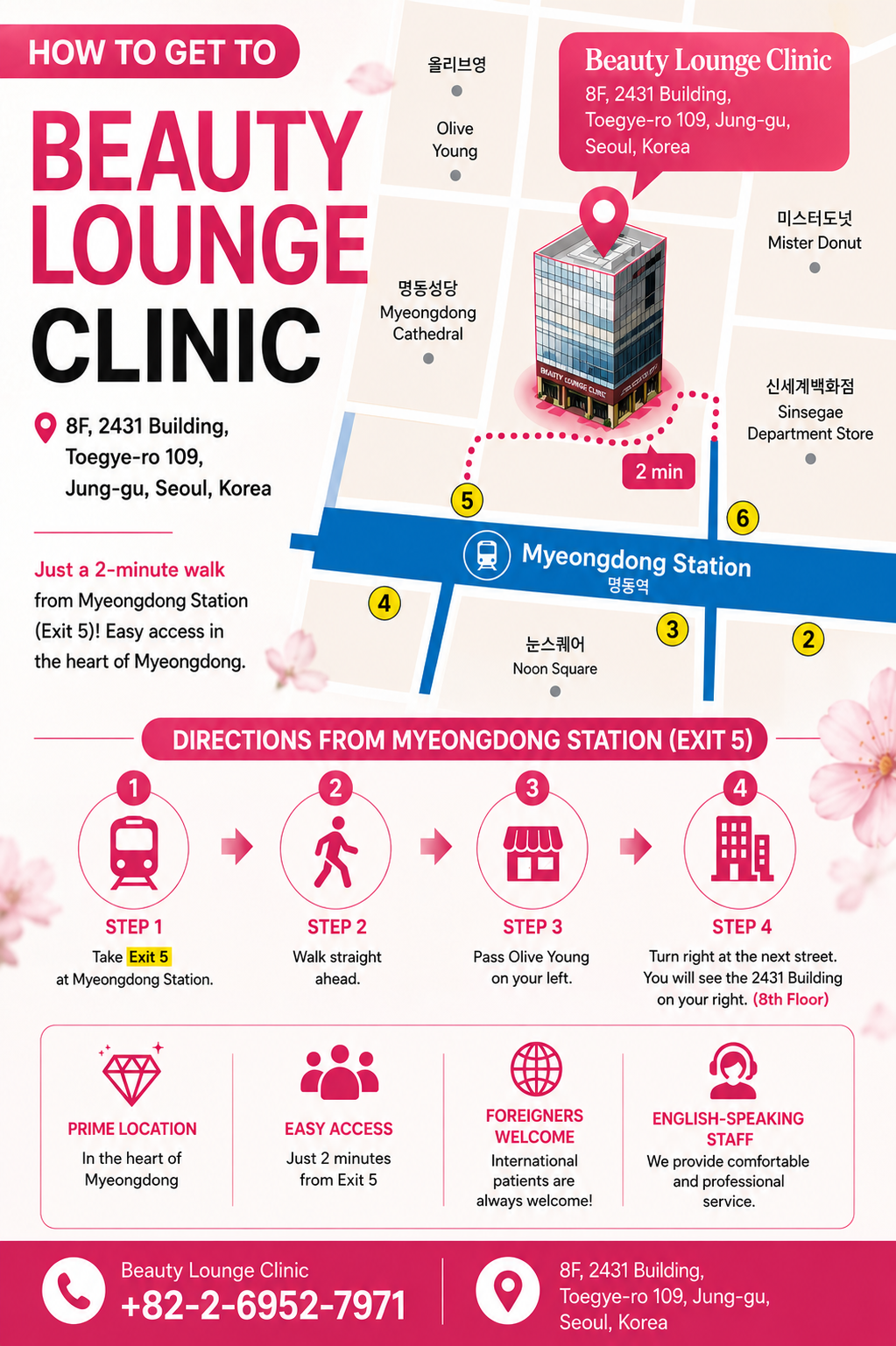
Located in Myeongdong, central Seoul, Beauty Lounge Clinic is conveniently positioned for international visitors staying around Myeongdong and nearby central Seoul districts.
For patients searching for PRP Treatment in Seoul, Platelet-Rich Plasma treatment in Korea, or a PRP clinic in Myeongdong, consultation can help determine whether the main concern is skin texture, fine lines, acne scars, dullness, reduced skin quality—or a combination—and whether PRP is an appropriate treatment option.
PRP Treatment in Seoul – FAQ
What is PRP (Platelet-Rich Plasma)?
PRP is prepared from a patient’s own blood by concentrating platelets within the plasma. It can then be used in selected cosmetic treatments intended to support tissue repair and skin rejuvenation.
Is PRP good for skin rejuvenation?
PRP may be used to support improvements in skin texture and overall skin quality, although results depend on the treatment area, individual skin condition, and whether it is combined with other procedures.
How much downtime is there after PRP treatment?
Downtime depends on the treatment method. Temporary redness, swelling, bruising, tenderness, or sensitivity may occur, particularly when PRP is injected or combined with microneedling.
Can foreigners receive PRP Treatment in Myeongdong?
Yes. International visitors should tell the clinic about their previous skin treatments, current medications, upcoming events, available recovery time, and travel schedule so treatment and aftercare can be planned appropriately.
Beauty Lounge Clinic Myeongdong – Personalized PRP Treatment in Seoul, Korea
PRP · Platelet-Rich Plasma · Skin Rejuvenation · Collagen Support · Skin Texture · Acne Scars · Regenerative Treatment · International Patient Care